For decades, Eveready was India’s battery memory: red cells, remotes, torches, clocks and a brand recall few consumer companies could match. But despite that recall, the business itself had become slow, mature and under-monetised.
The reason to look at Eveready today is not nostalgia. It is Jammu.
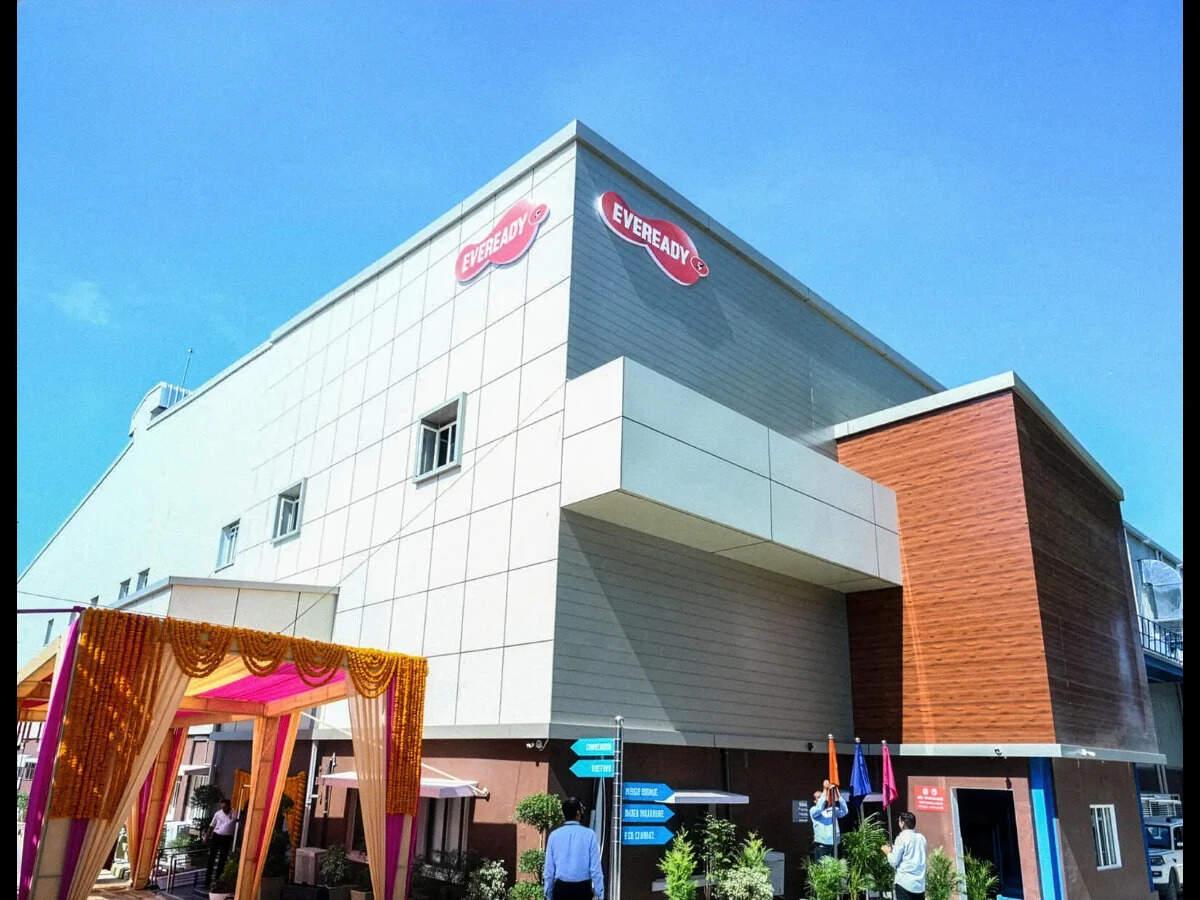
In April 2026, Eveready commissioned India’s only operating alkaline battery manufacturing facility in Jammu. The plant has been built with an investment of roughly ₹200 crore, has peak capacity of up to 360 million alkaline batteries annually, and management expects production of more than 100 million units in the first year of operations.
This is not just a capacity addition. It potentially changes the economics of Eveready’s most important growth category.
Until now, Eveready’s alkaline batteries were fully imported. With Jammu, the company moves to domestic manufacturing in a category that is still small in India but structurally growing. That creates three potential advantages: lower landed cost, better supply control, and pricing flexibility versus imported competitors. In a category where Duracell has stronger premium perception, Eveready does not need to out-premium Duracell. It needs to become the mass-premium alternative: trusted brand, longer-lasting product, made in India, and clearly better value.
That is the crux of the thesis.
India’s dry-cell battery market is beginning a slow but important transition from carbon-zinc to alkaline batteries. This is a consumer premiumisation cycle, but in a category that most investors barely track. Consumers may not understand battery chemistry. They do not need to. The use case will educate them.
A toy drains cheap batteries too quickly. A BP monitor needs reliable power. A smart remote, wireless mouse, gaming controller or electric toothbrush works better with longer-lasting cells. As device intensity rises, alkaline becomes less of a premium indulgence and more of a practical upgrade.
Eveready is unusually well placed for this shift.
It has the brand. It has the distribution. It has the market share. And now, crucially, it has domestic alkaline manufacturing.
The Incumbent With an Under-Monetised Platform
Eveready is not a small consumer brand trying to build distribution. It is already one of India’s deepest consumer distribution platforms. The company reaches roughly 4.5–4.7 million retail outlets and holds over 52% share in India’s dry-cell battery market.
In FY26, Eveready reported revenue of ₹1,455 crore, EBITDA of ₹168 crore and EBITDA margin of 11.5%. Batteries remained the core business, contributing ₹972 crore, or roughly 65% of revenue. Flashlights contributed ₹180 crore and lighting contributed ₹341 crore.
These are meaningful numbers. Yet Eveready has historically traded less like a national consumer franchise and more like a stagnant legacy business. That was not irrational. Revenue growth had been disappointing for years, the brand was under-invested, and execution did not match the strength of the franchise.
That is the first part of the opportunity: the market still remembers the old Eveready.
The second part is that the company is now under a different ownership and operating context. The Burman family, promoters of Dabur, became the controlling promoter group after the open offer process in 2022. Current promoter holding is around 43%. This matters. Eveready is now a century-old mass consumer brand under a promoter group that understands brand, distribution and consumer categories.
The question is whether this ownership change can convert brand recall into growth. The early signs are improving.
Carbon-Zinc Is the Cash Cow. Alkaline Is the Upgrade Cycle.
The battery market is not moving uniformly.
Carbon-zinc is mature. It remains essential in low-drain, price-sensitive use cases such as remotes, clocks and basic household applications. It is unlikely to disappear quickly, especially in India’s mass, semi-urban and rural markets. But it is not the growth engine.
Alkaline is.
Management has indicated that alkaline saliency in the industry was in single digits three to four years ago and is now closer to 15%. Their expectation is that alkaline can move to 20–25% of the industry over the next three years, and potentially one-third of the market over a longer 5–10 year period.
That is the market structure investors should focus on. Eveready does not need carbon-zinc to accelerate meaningfully. It needs carbon-zinc to remain stable and cash-generative while alkaline scales.
This transition may also be easier in general trade than it appears from the outside. Batteries are a low-ticket, high-rotation category where the retailer still influences the purchase decision. If Eveready can offer slightly better trade margins, a modest consumer price premium over zinc, and a visibly better value proposition versus premium alkaline competitors, the shift from zinc to alkaline can be retailer-led rather than purely consumer-pull-led.
The consumer may not ask for alkaline. But the retailer can say: “This one lasts longer.”
In a category with limited consumer research and strong brand recall, that matters.
This is already visible in management commentary. Alkaline volumes are attempting to double, while zinc volumes are flatter and tepid. In FY26, alkaline was nearly 10% of Eveready’s battery business. That may still sound small, but small base transitions are where operating leverage begins.
The right way to think about Eveready is not as a battery company growing at GDP. It is a dominant zinc-carbon franchise funding its own migration into a higher-value alkaline portfolio.
Why Jammu Matters So Much
Jammu matters because it shifts Eveready from being a participant in alkaline to being a structurally advantaged local producer.
Before Jammu, Eveready could sell alkaline, but it had to rely on imported supply. That limited the economics. Imported finished goods carry currency exposure, freight, lead-time risk and reduced flexibility on price-pack architecture. A domestic plant changes that.
There are four practical implications.
First, Eveready can potentially create a clearer price gap versus Duracell while protecting margins. Duracell remains the stronger premium alkaline brand, but if Eveready can offer visibly better value, it can win the mass-premium consumer.
Second, Eveready can push alkaline harder through general trade. A retailer-led upgrade from zinc to alkaline becomes easier when the company controls supply and can structure packs, schemes and trade margins more effectively.
Third, the plant gives Eveready operating leverage. The company expects more than 100 million units of alkaline production in year one against peak capacity of 360 million units. As utilisation improves, fixed-cost absorption should help margins over FY28–FY30.
Fourth, local manufacturing becomes more valuable when imported competitors face currency and supply-chain pressure. Management has acknowledged that rupee weakness against the yuan affects Chinese imports. Jammu does not eliminate Eveready’s zinc and currency exposure, but it reduces dependence on imported finished alkaline batteries.
This is why Jammu is the trigger. It gives Eveready the economic tool to convert an industry transition into company-level growth.
Distribution Is Still a Moat
A common mistake is to assume quick commerce will neutralise legacy distribution. In this category, that conclusion is premature.
Quick commerce is important. It improves urban visibility, supports premium packs, and makes brand comparison easier. Duracell is likely to remain strong in these channels, especially in alkaline. But quick commerce is not yet the category.
Management indicated that e-commerce was only around 4–5% of revenue in Q3 FY26, with quick commerce forming a little over half of that. In other words, quick commerce is visible, but still small in the revenue mix.
India’s battery market is still overwhelmingly general trade, semi-urban and rural. This is where Eveready’s distribution advantage matters. A 4.5–4.7 million outlet footprint is not easily replicated. It gives Eveready availability, retailer influence, price-pack flexibility and rural reach.
These matter more in batteries than in many other consumer categories because the purchase is small, often urgent, and rarely deeply researched.
The advantage is not that quick commerce is irrelevant. The advantage is that Eveready can play both games: defend and upgrade through general trade while also being present on the relevant quick-commerce platforms. Competition may be stronger online, but Eveready’s real edge is still the breadth of its physical distribution.
Pricing Power Is the Underappreciated Signal
The raw-material backdrop is not benign.
Zinc is a key input for the battery business, and management highlighted that zinc prices rose steeply in the second half of FY26. They expect the pressure to continue into the next few quarters. Currency has also been adverse.
Ordinarily, that would be a major concern. But the more important signal is that the industry has already shown some ability to absorb pricing.
Eveready took calibrated price increases in both carbon-zinc and alkaline batteries during FY26. Management also indicated that if cost ambiguity continues, another pricing review may be needed around Q2 FY27.
That matters.
Pricing power is one of the most important tests in a consumer category. If a company can take price increases in a low-ticket, high-reach product without losing category stability, it suggests the brand and distribution network still have economic value.
This does not mean margins will expand immediately. Management is guiding more toward margin defence than margin expansion in FY27. But the ability to pass through raw-material inflation is an important proof point for the long-term case. It supports the argument that Eveready is not merely a commodity battery seller; it still has category leadership.
FY27: The Near-Term Math
A conservative FY27 case does not require heroic assumptions.
Assume alkaline revenue doubles from its FY26 base, the rest of the business remains broadly stable, and EBITDA margin stays at FY26’s 11.5%. Under that framework, FY27 revenue lands around ₹1,550–1,570 crore. EBITDA is roughly ₹178–181 crore. Normalised PAT is approximately ₹97–98 crore, implying EPS of around ₹13.3–13.5.
At a market capitalisation of about ₹2,335 crore, that is roughly 24x conservative FY27 earnings. On EV/EBITDA, assuming debt reduces after Noida proceeds, the stock trades around 13.5–14x FY27 EBITDA.
That is not cheap on near-year earnings. But near-year earnings are not the core case.
The core case is FY27–FY30.
If alkaline becomes 20–25% of the battery mix, zinc remains stable, lighting grows modestly, and Jammu absorbs fixed cost, Eveready can potentially move to ₹1,900–2,100 crore revenue over three years. EBITDA margin can move from 11.5% toward 13–14% if localisation, mix and manufacturing optimisation play out. With lower debt and better utilisation, ROCE should also improve.
This is where the equity story becomes interesting. Eveready does not need 20% revenue growth to create value. A 10–12% revenue CAGR with 150–250 bps of margin expansion, falling debt and improving ROCE can be enough.
Why This Is More Than a Turnaround
Many turnarounds are cost stories. Eveready is more interesting because the cost story is paired with a category transition.
The company has six linked drivers.
First, it has a dominant incumbent position with over 52% dry-cell market share and nationwide distribution.
Second, it has general-trade upgrade potential. Retailer-led migration from zinc to alkaline may be easier if Eveready offers the right price-pack-trade-margin structure.
Third, it has premiumisation. Alkaline is shifting from niche to mainstream as high-drain devices proliferate.
Fourth, it has import substitution. Jammu moves Eveready from imported alkaline batteries to domestic manufacturing.
Fifth, it has a promoter reset. Burman ownership brings stronger consumer-sector credibility.
Sixth, it has balance-sheet repair. Noida land monetisation and debt reduction improve financial flexibility.
The combination is rare: a national consumer brand, a premiumising category, a domestic manufacturing trigger, and a valuation that is still not FMCG-like.
The Anti-Thesis
The risks are real.
Carbon-zinc is mature. Some old use cases, especially remotes, may face pressure over time as devices move toward rechargeable or solar formats. Lighting is competitive and unlikely to command FMCG-like margins. Zinc and currency volatility can delay margin recovery. Duracell remains the stronger premium alkaline brand, especially in quick commerce and modern trade.
And if Eveready cannot create a meaningful consumer price gap in alkaline, Jammu may improve margins but not materially change the growth trajectory.
The other risk is valuation discipline. At around 13.5–14x FY27 EBITDA and roughly 24x conservative FY27 earnings, Eveready is not a distressed bargain. The market is already giving some credit for improvement. The thesis requires execution.
But this anti-thesis does not break the case. It defines the monitorables.
What Needs to Be Tracked
The investment case should be judged on seven metrics:
- alkaline revenue growth and market share;
- price gap versus Duracell in AA/AAA packs;
- retailer push and pack architecture in general trade;
- zinc volume stability;
- EBITDA margin holding near or above 11.5% despite raw-material pressure;
- Jammu utilisation against the 100 million unit first-year target;
- net debt reduction after Noida proceeds.
If these indicators move in the right direction, Eveready can shift from “legacy battery company” to “branded portable power platform.”
That is the real re-rating event.
Conclusion
Eveready is not a nostalgia trade. It is not simply a bet on a famous brand. The better case is that India’s battery category is entering a slow but durable chemistry upgrade, and Eveready is now structurally better positioned to participate than it has been for decades.
The brand is old. The category is changing. The promoter is new. The plant is new. The economics may be changing.
That is why the story deserves attention.
“Give Me Red” may no longer be just a memory of India’s carbon-zinc past. If Jammu works, it could become the tagline of Eveready’s alkaline future.
From Give Me Red to Give Me Green?
Disclosure : We are invested in the company and these are just our thoughts on a thesis we are positive on. We are not SEBI registered advisors and this should not be construed as investment advice in any manner.