India’s next capex cycle may not only be about who builds factories, data centres, warehouses, renewable parks and electronics plants. It may also be about how quickly and efficiently they can be built.
That is where pre-engineered buildings, or PEBs, become interesting.
At first glance, PEB looks like a steel fabrication business. That is an incomplete frame. The better frame is this: PEB is an execution system that compresses construction time, improves accountability, reduces site complexity and allows fast-growing enterprises to convert capex intent into usable capacity faster.
In a country where manufacturing, logistics, renewables, semiconductors, data centres and industrial infrastructure are all trying to scale together, time is not a soft variable. It is economic value.
The basic idea: one building, one price, one date
Traditional industrial steel construction is fragmented. A customer hires a consultant. The consultant designs the building and prepares the bill of quantities. A contractor bids. Steel is bought from different suppliers. Fabrication and coordination often happen through multiple vendors and site-level teams.
Responsibility is split across consultant, contractor, supplier and site execution teams. This creates the usual risks: time slippage, quality variation, design changes, cost escalation and coordination gaps.
A PEB player changes this architecture.
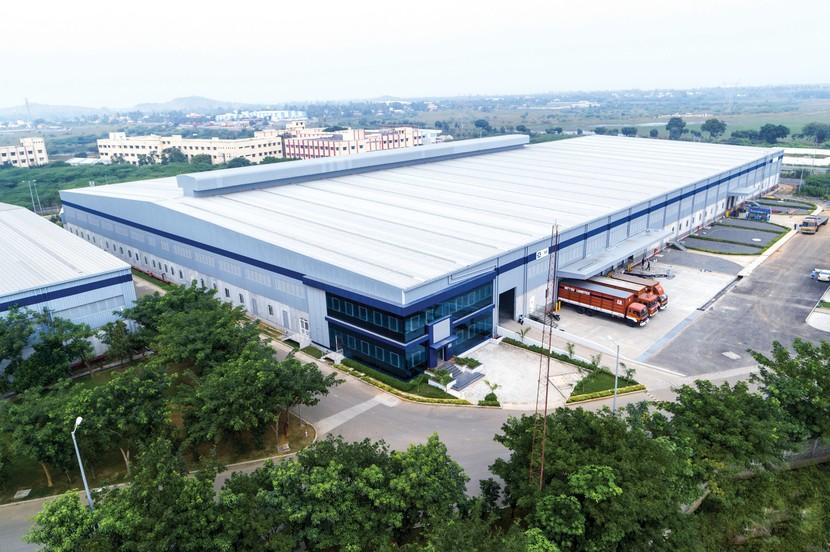
The customer gives the requirement: span, height, loading, cranes, mezzanines, usage, environmental conditions, earthquake zone, ventilation, insulation, utilities and future expansion needs. The PEB company then designs, engineers, manufactures, transports and erects the building. The structure is fabricated in a controlled factory environment and assembled at site largely through a pre-designed erection process.
This creates three large advantages.
First, speed. Factory fabrication can happen in parallel with civil foundation work. When the site is ready, the building can be dispatched and erected far faster than traditional site-led fabrication. Interarch’s management has indicated that customers can save up to 50% time versus traditional steel construction.
Second, accountability. Instead of multiple entities passing responsibility between each other, the PEB provider owns the design, manufacturing, delivery sequence and erection plan.
Third, quality and efficiency. Factory-made structures allow better design optimisation, lower wastage, controlled fabrication and better repeatability. At site, the requirement shifts from fabrication-heavy work to assembly-led execution.
This is why PEB should not be thought of as merely “cheaper steel construction”. The real proposition is faster commissioning, lower execution complexity and higher certainty.
Why this matters more now
India is entering a capex phase where large enterprises need capacity fast.
Solar module plants, battery factories, electronics units, warehouses, logistics parks, industrial sheds, data centres, auto ancillary facilities and power-sector projects are linked to customer commitments, supply-chain localisation, export timelines, renewable capacity schedules and demand visibility.
For these customers, the building is not the whole project, but it is often a critical path item.
If the building is delayed, machinery installation is delayed.
If machinery installation is delayed, production is delayed.
If production is delayed, revenue and market-share capture are delayed.
That changes the pricing conversation.
A PEB structure may be a modest part of total project cost, but it can be essential to project commissioning. In that context, the lowest bidder is not always the best bidder. The customer values design capability, execution history, site management, delivery sequencing, quality and certainty.
This is especially true for larger customers where the capex project itself may be far more valuable than the incremental saving from choosing a weaker execution partner.
That is the core investment idea: PEB is moving from a cost-saving product to a time-saving and execution-risk-reducing product.
A category with longevity
The numbers support the intuition.
EPACK Prefab’s investor presentation places India’s PEB industry at roughly ₹210 billion in FY25E, expected to rise to ₹330–345 billion by FY30P. Interarch’s presentation also highlights a multi-year industry growth trajectory and rising PEB penetration in overall construction.
The more important point is not the exact five-year CAGR. It is the low base.
PEB penetration in Indian construction remains low. Organised players still have room to gain share from unorganised and regional fabricators. Industrial and infrastructure use cases are broadening. The market is no longer only about factory sheds.
PEB applications now include manufacturing plants, warehouses, cold storage, airports, power plants, renewable energy facilities, data centres, logistics parks, high-rise steel structures, heavy structures and complex industrial buildings.
That gives the category longevity.
The first leg of growth is industrial manufacturing.
The second is logistics and warehousing.
The third is sunrise-sector capex: data centres, renewables, semiconductors, EV ecosystem, electrical equipment and power.
The fourth could be heavier steel structures and exports, where Indian players with engineering capability and cost competitiveness may find new addressable markets.
This means the listed PEB opportunity is not merely a cyclical capex trade. It has the early contours of a structural category migration.
Why fast-growing enterprises prefer prefab
A fast-growing enterprise does not only ask: “What is the cheapest way to build?”
It asks:
“How quickly can we start production?”
“Who will own the complete building timeline?”
“Can we expand later?”
“Can the structure handle cranes, utilities and future operational requirements?”
“Will the project be delivered without site chaos?”
PEB answers these questions better than traditional fragmented construction in many industrial use cases.
A solar module manufacturer expanding capacity does not want site fabrication risk to delay line installation. A data centre needs precision, predictable timelines and structural reliability. A warehouse operator values scale, speed and repeatability. An auto ancillary supplier may need quick brownfield or greenfield expansion to meet OEM demand. A cold-storage operator values insulated panels, thermal performance and faster deployment.
That is why the customer set is expanding.
EPACK highlights renewables, data centres, semiconductors, power and energy including EV, logistics and other large-scale prefab use cases where speed is non-negotiable. Interarch’s project examples span solar PV module manufacturing, data centre buildings, airports, industrial and logistics parks, packaging, hospitals, food processing and manufacturing facilities.
The common thread is not the sector. It is the need for speed, precision and accountable delivery.
Interarch: a listed leader in the space
Within the listed universe, Interarch stands out as one of the higher-quality platforms.
It has a 40+ year history, is ranked second among integrated PEB players in India, has 6.5% market share, 201,000 MTPA installed capacity, 850+ PEB contracts executed between FY15 and FY26, and 72% repeat orders in FY26.
This matters because PEB is a reference-led business. For large customers, past execution is not cosmetic; it is underwriting.
The company’s model is deeply integrated: in-house design and engineering, manufacturing, project management and erection capabilities. It has a large structural design and detailing team, a project-management team, empanelled builders and multiple manufacturing facilities across regions.
This is not a commodity trader in steel. It is a capital-project partner.
The order book is currently healthy rather than spectacular. Interarch had ₹1,703 crore of order book as of 30 April 2026, with exposure across industrial, logistics, infrastructure and renewables. Management has also explained that in PEB, order book is constrained by deliverable capacity. Customers typically want execution within months, not years. A company cannot keep taking orders indefinitely unless it has plant, design, manufacturing and site-execution bandwidth to deliver.
This explains why FY27 growth guidance is not explosive despite strong demand. The bottleneck is capacity and execution absorption, not market opportunity.
That bottleneck should ease.
Interarch is adding a Gujarat PEB plant and an Andhra Pradesh heavy steel structures plant in phases. The Gujarat capacity can improve western market reach and reduce logistics friction. The Andhra heavy-structures plant can open a higher-complexity adjacency, including large industrial structures where heavier steel is required.
As these capacities come on stream, order intake should logically improve because the company will be able to accept more deliverable work.
Recent order announcements also support the demand thesis. Interarch has secured meaningful orders across energy, hydrocarbon, renewable energy, data centre and industrial sectors. These are precisely the use cases that should drive the next leg of PEB adoption.
EPACK: the faster-growth challenger
EPACK Prefab is also important because it validates the category opportunity from another angle.
EPACK reported FY26 revenue of ₹1,525 crore, up 34.5%, with the prefab segment growing 45%. Its pending order book was ₹1,112.7 crore as of March 2026, and management has guided for FY27 overall revenue of ₹1,925–1,950 crore.
The company is adding capacity at Mambattu, Ghiloth and Gujarat, and is deliberately positioning itself around renewables, data centres, semiconductors, energy, EV and logistics.
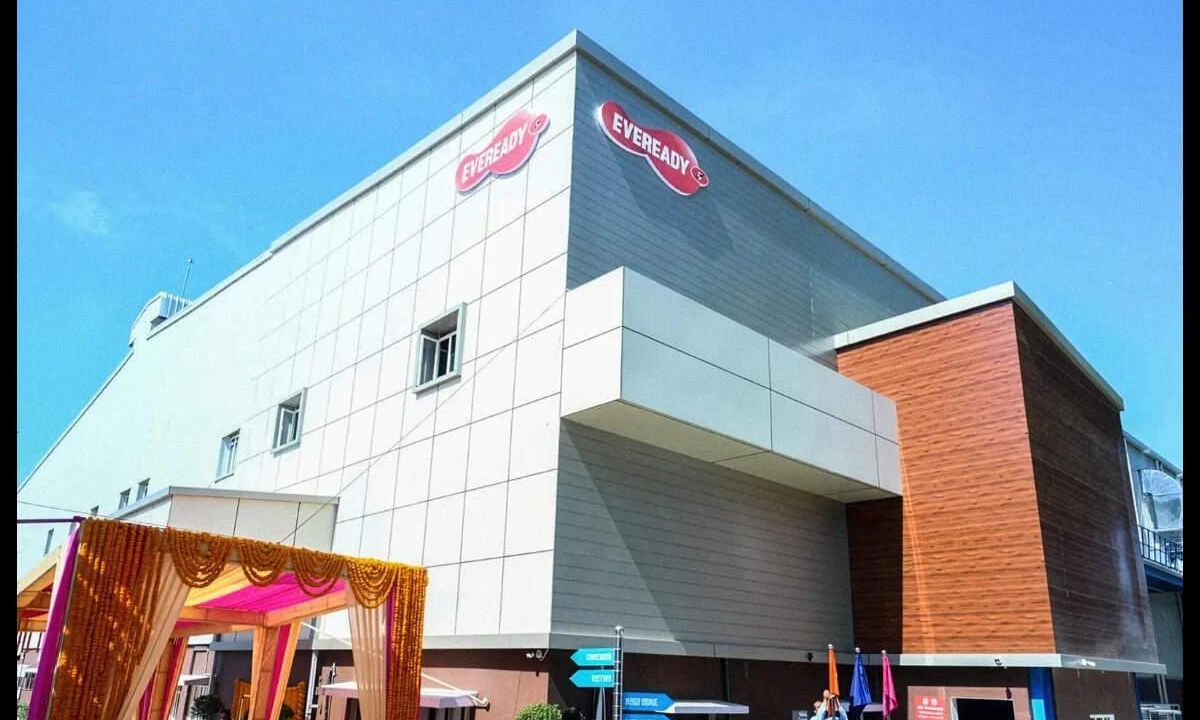
EPACK has also demonstrated the speed proposition in a visible way: its Mambattu factory project was completed in 150 hours and was awarded for fastest erection of a pre-engineered factory.
For the sector, EPACK’s growth is useful evidence. It shows that the opportunity is not limited to one incumbent. Multiple scaled players can grow if they have manufacturing capacity, design capability, execution discipline and regional proximity.
For the investor, however, the distinction matters. Our view is that Interarch appears to be the better-quality platform with stronger history, leadership credentials and institutional positioning. EPACK appears to offer sharper near-term growth, but we would prefer Interarch as the cleaner long-term expression of the theme.
Steel is the key margin variable, but not a thesis breaker
The most obvious risk in PEB is steel.
Steel is the dominant raw material. When steel prices rise sharply, fixed-price contracts can pressure margins for a quarter or two.
But this should be calibrated, not exaggerated.
In a low-end commodity fabrication business, steel inflation can destroy margins because the customer can switch easily and the supplier has little differentiation. In higher-quality PEB, the customer is buying an execution outcome, not just steel tonnage.
For critical capex projects, delivery certainty can matter more than the last 1–2% of project cost.
Interarch’s commentary is useful here: price is secondary when the customer is evaluating design, engineering, ability to manufacture, supply on schedule and erect at site. The company also bids continuously, factoring expected steel costs into each job rather than locking all work at one static steel price.
EPACK’s Q4FY26 commentary gives another data point. Steel inflation hurt Q4 margins, but management said it had secured price increases in more than 80% of contracts and expected full-year FY27 margin to remain above 10%.
The right conclusion is balanced.
Steel spikes will create quarterly volatility. Margins should not be mechanically extrapolated upward simply because of operating leverage. But for credible PEB players serving critical industrial customers, steel pass-through is a reasonable expectation over time, especially when order cycles are short and delivery criticality is high.
Valuation: reasonable versus growth longevity
The valuation case is not that PEB companies are optically cheap on trailing numbers. The case is that they may be reasonably valued relative to the duration of growth.
Our view is that Interarch, at roughly 20–21x forward earnings based on our FY27 estimates, offers a reasonable entry point for a business with 20%+ ROCE potential, a net-cash balance sheet, category leadership, long customer relationships and a multi-year growth runway.
FY28 revenue can move toward ₹2,500–2,575 crore if Gujarat and heavy structures scale, giving further optionality.
EPACK also looks interesting, especially given higher near-term growth. Around ₹227 per share, it was trading closer to 18x FY27E earnings on our assumptions. However, our preference remains Interarch because of its longer history, stronger brand, leadership position and more established institutional positioning.
In good markets, if investors start viewing PEB as a structural capex-enabler rather than a steel-linked project contractor, the best player could command a materially higher multiple.
That is where the asymmetry lies.
The market may currently be valuing these companies as construction ancillaries; the better framing may be “industrial capacity enablers”.
The investment thesis
The thesis is simple.
India needs to build faster. Factories, warehouses, solar plants, data centres, electronics facilities, EV supply-chain units and industrial parks need speed, precision and accountability. PEB offers all three.
The sector is still underpenetrated. Organised players are gaining share. New use cases are emerging. Large customers care more about execution certainty than just quoted price. Capacity is currently a constraint, but that itself indicates demand. As credible players add regional plants and heavier structure capabilities, the addressable market expands.
Interarch is, in our view, the cleaner long-term bet on this theme: leadership, execution history, repeat customers, integrated capabilities and upcoming capacity.
EPACK is the faster-growth challenger with strong near-term numbers and sector exposure.
The risk is that steel volatility, working capital, execution delays or aggressive competition cap margins. The opportunity is that India’s industrial buildout may convert PEB from a niche construction method into a mainstream capex solution.
For a long-term investor, that is the key question: is this merely a steel-fabrication cycle, or is this the early phase of a category shift?
Our view: the evidence increasingly points to the latter.
Disclosure and disclaimer
We are invested in Interarch Building Solutions. This note is written only to express our thoughts on why we find the company and the broader PEB category interesting. It is not a recommendation to buy, sell or hold any security.
We are not SEBI registered research analysts or investment advisers. This note is for informational and educational purposes only and should not be treated as investment advice. Readers should do their own research and consult a qualified adviser before making any investment decision.